The architecture of global power has always relied on more than contracts, armies, or natural resources. It has relied, above all, on trust. Today, that foundation is shifting through a quiet, incremental erosion.
By Aleksander Meidell-Hagewick
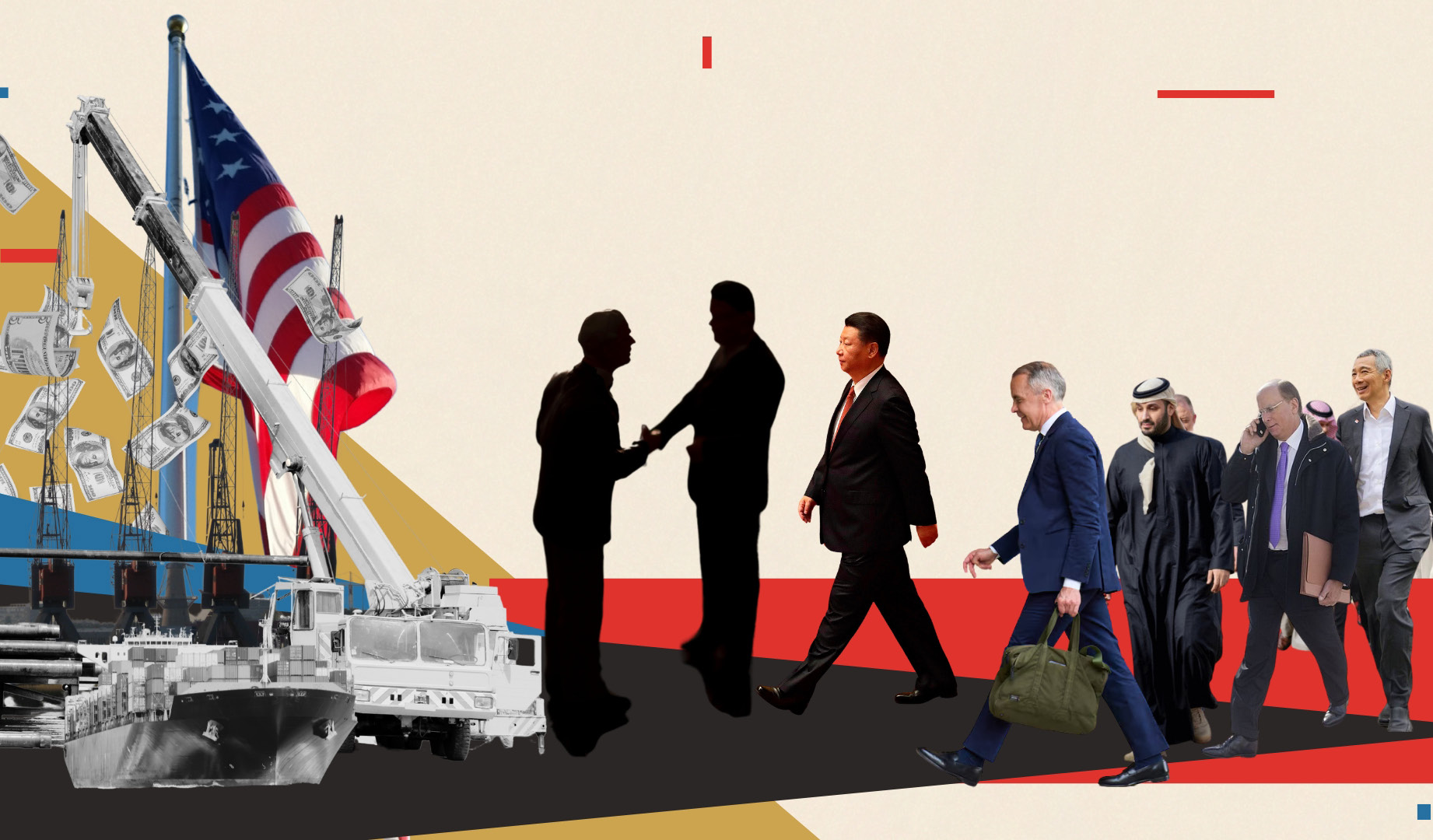 The architecture of global power has always relied on more than contracts, armies, or natural resources. It has relied, above all, on trust.
Trust that debts would be repaid.
Trust that rules would be upheld.
Trust that systems would endure, even under strain.
For decades, the United States embodied that trust. It was not simply the world's largest economy or its strongest military power; it was the world's guarantor of systemic stability. Its debt was not merely a financial instrument; it was a signal of confidence in the continuity of a global order underwritten by American credibility.
American promises were trusted not just because of their legal standing, but because of their perceived inevitability. The American system was too foundational, too structurally central, for default to be imagined. Belief in the United States was belief in the system itself.
Today, that foundation is shifting. Not through spectacular collapse or visible confrontation, but through a quiet, incremental erosion.
The financial architecture remains in place. The alliances still hold. The dollar is still dominant.
Yet underneath the surface, belief is beginning to migrate. The cumulative weight of structural debt, rising refinancing costs, demographic shifts, and strategic recalculations among America's traditional lenders is slowly rewriting the balance of trust.
It is not simply a question of whether the United States will remain powerful. It will.
The deeper question is this: Will the silent concessions required to maintain liquidity and stability ultimately reshape who truly controls America's flows of goods, energy, data, and capital?
The future of American power will not be decided at the ballot box or in diplomatic summits alone. It will be decided slowly and quietly without becoming headlines, but decisively through board rooms and negotiations regarding ownership of the systems that keep the economy and the global order moving.
And the reordering has already begun.
The Historical Power of U.S. Debt
For most of the twentieth century, American debt was not seen as a weakness. It was a symbol of system leadership. After World War II, the United States emerged not just victorious, but structurally dominant. Through initiatives like the Marshall Plan, the Bretton Woods institutions, and later the petrodollar system, American debt became a foundation upon which the global economy was built (IMF, "Bretton Woods and the Postwar Order," 2022).
The world held U.S. Treasuries not only for yield, but because holding American obligations was a bet on systemic stability itself.
American debt financed military bases across continents, rebuilt devastated economies, sustained vast research projects, and allowed the U.S. to anchor the postwar order. Trust in American governance and American economic dynamism allowed the country to borrow and expand without triggering the normal market penalties associated with sovereign debt accumulation.
Structural Cracks: Debt Dynamics and Rising Refinancing Risk
The structural cracks in the American financial system are no longer hidden. They are now visible in the basic math of public finance. America's debt-to-GDP ratio has surpassed 130 percent, the highest sustained level in modern history. The Congressional Budget Office projects that without significant changes, federal debt will climb to nearly 180 percent of GDP within the next 30 years (CBO, "Long-Term Budget Outlook," 2024).
Debt was not a burden to be feared. It was a tool of expansion and reassurance. Borrowing was system maintenance, not systemic risk. This dynamic rested on two assumptions:
• First, that American economic growth would always outpace its debt accumulation, making liabilities manageable over time.
• Second, that belief in the American system would remain so strong that no significant bloc of creditors would question the value of U.S. obligations.
For decades, assumptions were self-reinforcing. Strong growth fed trust. Trust reduced financing costs. Low costs sustained American leadership. Today, both assumptions are under growing strain. Demographic pressures, political fragmentation, and rising debt-servicing costs are increasingly cited by global institutions as threats to long-term U.S. fiscal sustainability (IMF, "United States: Fiscal Monitor Report," 2024).
This sharp rise has systemic consequences. Servicing costs on existing debt are beginning to crowd out other budget priorities. Net interest payments now rival total discretionary spending on areas like education, transportation, and infrastructure.
Meanwhile, the composition of Treasury buyers is shifting:
• Foreign governments, once steady and enthusiastic buyers of U.S. debt, are gradually withdrawing.
• China's holdings of Treasuries have declined by over 30 percent since their 2013 peak (U.S. Treasury International Capital Report, 2025).
• Japan, traditionally the largest foreign holder, has also trimmed its exposure.
Gulf states are redirecting surplus capital toward domestic megaprojects and regional infrastructure investments aligned with their Vision 2030 goals.
Domestic buyers—pension funds, banks, and mutual funds—cannot fully absorb the additional supply without triggering internal distortions. Relying too heavily on domestic demand risks financial repression, distorting capital allocation, and weakening long-term economic dynamism.
The Federal Reserve, once the buyer of last resort during the quantitative easing era, is now reducing its balance sheet. Its absence further intensifies the refinancing pressure.
The U.S. is not facing a liquidity crisis in the traditional sense. It is facing a refinancing regime shift: an environment where maintaining the status quo requires not just issuing more debt, but offering higher returns or new concessions. Foreign capital will be invited into critical infrastructure assets that were once considered untouchable. Ownership stakes in ports, energy terminals, freight corridors, telecommunications infrastructure, and cloud systems will be quietly offered as incentives to maintain trust and investment inflows.
Each deal will be framed as modernization, as competitiveness enhancement, or as part of broader economic revitalization efforts. Yet collectively, these arrangements will represent something more profound: a gradual but decisive concession of operational sovereignty.
In practical terms, this means opening up alternative pathways to attract and stabilize capital. Strategic assets—ports, energy hubs, rail systems, cloud infrastructure—represent hard, income-generating systems that can offer foreign investors secure returns in place of traditional Treasury holdings. This shift is not a tactical adjustment. It is the beginning of a systemic reordering.
The United States will continue to find buyers for its liabilities. However, increasingly, those buyers will seek not just yield, but ownership stakes in the systems that keep the American and global economy functioning. The silent reallocation of trust is becoming a silent reallocation of systemic influence and control.
In Europe, for example, Chinese and Gulf investors quietly acquired stakes in critical ports, energy grids, and high-speed rail corridors during the post-2008 financial adjustments (European Commission Report on Foreign Direct Investment Screening, 2023).
Systemic Concession: Beyond Collapse, Toward Strategic Recalibration
The United States is entering a similar phase. However, its scale is larger, and the consequences are potentially more far-reaching. The reordering will happen quietly. Control will shift corridor by corridor, terminal by terminal, server by server.
There will be no dramatic sovereign default that shakes the foundations of the global financial system overnight. There will be no single event that marks the end of American financial dominance. This is not an ideological defeat. It is a systemic recalibration.
Silent Seizures: How America Will Sell Its Strategic Assets
Systemic change rarely arrives with proclamations. It advances quietly, often through necessity masked as modernisation or investment opportunity.
Today, faced with escalating debt burdens, rising refinancing costs, and a structural shortage of traditional buyers, the United States is entering a new phase. A phase of silent systemic concessions, where slices of critical infrastructure are quietly opened to foreign ownership in exchange for liquidity and temporary stability.
The U.S. Department of Transportation's "Rail Infrastructure Strategy Update 2025" highlights over $2.4 billion in new funding initiatives that explicitly aim to unlock private sector and foreign co-investment.
Farmland and food supply systems are increasingly owned by foreign entities. The U.S. Government Accountability Office reports that foreign investors now hold interests in over 40 million acres of American farmland, often structured through chains of proxies and intermediaries (GAO, "Foreign Investment in Agricultural Land," 2024).
This is not theoretical. It is already happening.
Ports and logistics hubs are increasingly structured for partial foreign acquisition through public-private partnerships and infrastructure investment platforms, supported by initiatives like the U.S. Infrastructure Investment and Jobs Act (U.S. General Services Administration, "Infrastructure Modernisation Plan," 2023).
Data centres, cloud infrastructure platforms, and undersea cable networks are drawing intensified investment interest from Gulf and Asian sovereign funds. PwC's "Middle East Digital Infrastructure Report 2025" projects that Gulf sovereign-backed data centre capacity will triple by 2030, with significant allocations already targeting U.S. cloud and edge computing hubs.
Each transaction is framed as economic modernisation. Each investment is justified as necessary to maintain competitiveness in an increasingly fragmented global economy.
Yet collectively, they reveal a deeper pattern.
The arteries through which goods, energy, food, and information move are being reshaped ownership by ownership, contract by contract.
Control is not being lost through dramatic acts. It is being reallocated through quiet systemic negotiation.
The United States is not selling its future all at once. It is selling access—corridor by corridor, port by port, grid by grid—under the pressure of structural debt and refinancing constraints.
Concrete examples are emerging. The Virginia Port Authority's 49-year lease agreement at Virginia International Gateway illustrates how strategic port assets are transitioning into semi-private, multi-stakeholder structures (Virginia Port Authority, "Annual Report," 2024).
Energy terminals and renewable grids are attracting sovereign wealth fund investments at an increasing rate.
Each port contract, each energy terminal investment, each data centre acquisition represents a silent pivot point in the structure of American autonomy. Swiss-structured intermediaries, Luxembourg-based and Cayman Islands-based entities facilitate these flows (OECD Report on Chinese FDI, 2024).
And these pivots, accumulated quietly and rationalised pragmatically, will define the practical limits of American sovereignty in the coming decades.
This layered structuring allows capital to blend into broader pools of institutional investment, reducing political visibility while maintaining exposure.
The New Foreign Stakeholders Inside America
The foreign capital reshaping America's strategic infrastructure is not monolithic. It is a layered, multipolar wave of investment, driven by different priorities but converging around a shared strategic logic.
The new stakeholders are not ideological actors seeking political dominance. They are pragmatic investors focused on securing systemic optionality: the ability to prioritise flows, negotiate influence, and hedge geopolitical risks without needing to engage in overt confrontation.
The Gulf sovereign wealth funds are among the most active players. Saudi Arabia's Public Investment Fund (PIF), Abu Dhabi's Mubadala Investment Company, and Qatar Investment Authority (QIA) have significantly increased their global infrastructure exposure over the past five years.
PIF, for example, has stated its intention to become one of the world's largest and most diversified global investors by 2030, with heavy emphasis on logistics, energy transition, digital infrastructure, and supply chain hubs (PIF Strategy Document, 2024).
Singaporean capital is another critical force. GIC and Temasek Holdings have expanded aggressively into North American infrastructure, targeting logistics, renewable energy, healthcare systems, and digital backbones. Their strategic logic focuses on long-duration resilience, inflation protection, and the ability to anchor critical operational flows across multiple geographies (GIC Annual Report, 2024).
Japanese private capital is also moving steadily, particularly through pension funds and industrial groups seeking stable, hard-asset returns in an increasingly uncertain global financial environment.
The new foreign stakeholders understand something critical: real strategic power lies not in visible confrontation, but in controlling the invisible systems that define the boundaries of possibility.
Chinese capital remains active, although more cautiously and often indirectly. While direct Chinese state-linked investment into U.S. strategic sectors has been sharply restricted, significant flows continue to reach American infrastructure through layered intermediaries.
Strategic Autonomy Under Negotiation
Sovereignty is no longer simply a matter of political declarations or constitutional frameworks. It is increasingly a question of who controls the systems that sustain an economy's operational life.
In the emerging order, ownership of ports, rail corridors, energy grids, cloud infrastructure, and data hubs is becoming the true foundation of influence. As foreign investors embed themselves within these critical infrastructures, the practical exercise of sovereignty becomes subject to new conditions.
The tariff measures may slow certain imports. They may even revive isolated sectors temporarily, and increase valuations when ownership is offered. But they cannot prevent a future in which foreign stakeholders, embedded deeply into America's critical systems, will have structural negotiating power over the flows that define the nation's economic health.
Operational sovereignty is no longer purely national. It is layered, negotiated, and contingent on the interests of asset owners whose priorities may not align perfectly with public objectives. The influence is subtle but powerful.
At a major American port where foreign capital holds partial operational rights, cargo prioritisation decisions can favor certain trade flows over others. In rail corridors co-financed by Gulf sovereign wealth funds, expansion projects can be structured to benefit specific supply chain partners. In energy grids upgraded with Asian co-investment, dispatch rules and maintenance priorities can be shaped through operational boards and contractual frameworks.
None of this requires overt political confrontation. It occurs naturally within the structures of blended finance and public-private operational governance. This is the new reality.
America's strategic autonomy is not being eliminated overnight. It is being negotiated transaction by transaction, corridor by corridor, flow by flow. Each new investment deal embeds a degree of foreign influence. Each new concession agreement shifts operational leverage incrementally.
President Trump's 2025 tariff surge, imposing a universal 10 percent tariff on all imports and higher surcharges on imports from China, Vietnam, and select European partners, is a response to visible symptoms of strategic erosion (White House Press Office, "Tariff Adjustment Act," 2025). The tariffs aim to protect domestic manufacturing, rebalance trade flows, and project economic strength.
However, tariffs address the visible layer of economic friction, not the deeper systemic shift. For decades, the United States was the primary custodian of this trust. Its debt was seen as an anchor of system stability, its institutions as guarantors of global continuity.
Today, that trust is not disappearing. It is repositioning.
The gradual reallocation of ownership over critical arteries like ports, energy corridors, data networks, and supply chains reflects not collapse, but a strategic recalibration. It aligns with the broader maturation of the global geopolitical environment, where multipolar influence over systemic flows is becoming both possible and necessary.
History shows that systemic influence rarely vanishes. It evolves.
After the Roman Empire's formal structures gave way—though slightly more dramatically than the shift we're seeing now—influence was distributed into a network of autonomous city-states that maintained trade, governance, and culture across a fragmented but resilient landscape.
During the eighteenth century, Dutch financial primacy gave way to British global leadership, not through collapse, but through a quiet realignment of trade routes, capital markets, and maritime control.
In the twentieth century, Britain transitioned global financial stewardship to the United States, reflecting an economic and infrastructural shift more than a political surrender.
In each case, the visible symbols of old power persisted for a time, even as operational control migrated to new stewards aligned with evolving realities.
Today, we are witnessing a similar repositioning.
Far from the abandonment of American leadership, but rather its adaptation to a world where resilience requires the distribution of operational stewardship across multiple centers of trust.
The emerging order is not defined by confrontation between empires. It is defined by distributed stewardship of the systems that connect them. Flags will continue to fly. Sovereignty will continue to be asserted. Yet the real strategic power will reside increasingly with those who govern the flows of goods, energy, information, and capital across jurisdictions and alliances.
Ownership will be layered. Operational sovereignty will be negotiated. Influence will be exercised quietly through the governance of corridors rather than through political declarations.
The repositioning underway is not a sign of disorder. It is the maturation of a global architecture that reflects the complexity, resilience, and interdependence of the twenty-first century.
Those who recognise this shift early will understand that future advantage lies not in symbolic assertions of control, but in mastering the operational systems that define global possibility. Democratised control through collaborative investment and distributed influence.
Control of flow is control of destiny.
And the repositioning has already begun.
The architecture of global power has always relied on more than contracts, armies, or natural resources. It has relied, above all, on trust.
Trust that debts would be repaid.
Trust that rules would be upheld.
Trust that systems would endure, even under strain.
For decades, the United States embodied that trust. It was not simply the world's largest economy or its strongest military power; it was the world's guarantor of systemic stability. Its debt was not merely a financial instrument; it was a signal of confidence in the continuity of a global order underwritten by American credibility.
American promises were trusted not just because of their legal standing, but because of their perceived inevitability. The American system was too foundational, too structurally central, for default to be imagined. Belief in the United States was belief in the system itself.
Today, that foundation is shifting. Not through spectacular collapse or visible confrontation, but through a quiet, incremental erosion.
The financial architecture remains in place. The alliances still hold. The dollar is still dominant.
Yet underneath the surface, belief is beginning to migrate. The cumulative weight of structural debt, rising refinancing costs, demographic shifts, and strategic recalculations among America's traditional lenders is slowly rewriting the balance of trust.
It is not simply a question of whether the United States will remain powerful. It will.
The deeper question is this: Will the silent concessions required to maintain liquidity and stability ultimately reshape who truly controls America's flows of goods, energy, data, and capital?
The future of American power will not be decided at the ballot box or in diplomatic summits alone. It will be decided slowly and quietly without becoming headlines, but decisively through board rooms and negotiations regarding ownership of the systems that keep the economy and the global order moving.
And the reordering has already begun.
The Historical Power of U.S. Debt
For most of the twentieth century, American debt was not seen as a weakness. It was a symbol of system leadership. After World War II, the United States emerged not just victorious, but structurally dominant. Through initiatives like the Marshall Plan, the Bretton Woods institutions, and later the petrodollar system, American debt became a foundation upon which the global economy was built (IMF, "Bretton Woods and the Postwar Order," 2022).
The world held U.S. Treasuries not only for yield, but because holding American obligations was a bet on systemic stability itself.
American debt financed military bases across continents, rebuilt devastated economies, sustained vast research projects, and allowed the U.S. to anchor the postwar order. Trust in American governance and American economic dynamism allowed the country to borrow and expand without triggering the normal market penalties associated with sovereign debt accumulation.
Structural Cracks: Debt Dynamics and Rising Refinancing Risk
The structural cracks in the American financial system are no longer hidden. They are now visible in the basic math of public finance. America's debt-to-GDP ratio has surpassed 130 percent, the highest sustained level in modern history. The Congressional Budget Office projects that without significant changes, federal debt will climb to nearly 180 percent of GDP within the next 30 years (CBO, "Long-Term Budget Outlook," 2024).
Debt was not a burden to be feared. It was a tool of expansion and reassurance. Borrowing was system maintenance, not systemic risk. This dynamic rested on two assumptions:
• First, that American economic growth would always outpace its debt accumulation, making liabilities manageable over time.
• Second, that belief in the American system would remain so strong that no significant bloc of creditors would question the value of U.S. obligations.
For decades, assumptions were self-reinforcing. Strong growth fed trust. Trust reduced financing costs. Low costs sustained American leadership. Today, both assumptions are under growing strain. Demographic pressures, political fragmentation, and rising debt-servicing costs are increasingly cited by global institutions as threats to long-term U.S. fiscal sustainability (IMF, "United States: Fiscal Monitor Report," 2024).
This sharp rise has systemic consequences. Servicing costs on existing debt are beginning to crowd out other budget priorities. Net interest payments now rival total discretionary spending on areas like education, transportation, and infrastructure.
Meanwhile, the composition of Treasury buyers is shifting:
• Foreign governments, once steady and enthusiastic buyers of U.S. debt, are gradually withdrawing.
• China's holdings of Treasuries have declined by over 30 percent since their 2013 peak (U.S. Treasury International Capital Report, 2025).
• Japan, traditionally the largest foreign holder, has also trimmed its exposure.
Gulf states are redirecting surplus capital toward domestic megaprojects and regional infrastructure investments aligned with their Vision 2030 goals.
Domestic buyers—pension funds, banks, and mutual funds—cannot fully absorb the additional supply without triggering internal distortions. Relying too heavily on domestic demand risks financial repression, distorting capital allocation, and weakening long-term economic dynamism.
The Federal Reserve, once the buyer of last resort during the quantitative easing era, is now reducing its balance sheet. Its absence further intensifies the refinancing pressure.
The U.S. is not facing a liquidity crisis in the traditional sense. It is facing a refinancing regime shift: an environment where maintaining the status quo requires not just issuing more debt, but offering higher returns or new concessions. Foreign capital will be invited into critical infrastructure assets that were once considered untouchable. Ownership stakes in ports, energy terminals, freight corridors, telecommunications infrastructure, and cloud systems will be quietly offered as incentives to maintain trust and investment inflows.
Each deal will be framed as modernization, as competitiveness enhancement, or as part of broader economic revitalization efforts. Yet collectively, these arrangements will represent something more profound: a gradual but decisive concession of operational sovereignty.
In practical terms, this means opening up alternative pathways to attract and stabilize capital. Strategic assets—ports, energy hubs, rail systems, cloud infrastructure—represent hard, income-generating systems that can offer foreign investors secure returns in place of traditional Treasury holdings. This shift is not a tactical adjustment. It is the beginning of a systemic reordering.
The United States will continue to find buyers for its liabilities. However, increasingly, those buyers will seek not just yield, but ownership stakes in the systems that keep the American and global economy functioning. The silent reallocation of trust is becoming a silent reallocation of systemic influence and control.
In Europe, for example, Chinese and Gulf investors quietly acquired stakes in critical ports, energy grids, and high-speed rail corridors during the post-2008 financial adjustments (European Commission Report on Foreign Direct Investment Screening, 2023).
Systemic Concession: Beyond Collapse, Toward Strategic Recalibration
The United States is entering a similar phase. However, its scale is larger, and the consequences are potentially more far-reaching. The reordering will happen quietly. Control will shift corridor by corridor, terminal by terminal, server by server.
There will be no dramatic sovereign default that shakes the foundations of the global financial system overnight. There will be no single event that marks the end of American financial dominance. This is not an ideological defeat. It is a systemic recalibration.
Silent Seizures: How America Will Sell Its Strategic Assets
Systemic change rarely arrives with proclamations. It advances quietly, often through necessity masked as modernisation or investment opportunity.
Today, faced with escalating debt burdens, rising refinancing costs, and a structural shortage of traditional buyers, the United States is entering a new phase. A phase of silent systemic concessions, where slices of critical infrastructure are quietly opened to foreign ownership in exchange for liquidity and temporary stability.
The U.S. Department of Transportation's "Rail Infrastructure Strategy Update 2025" highlights over $2.4 billion in new funding initiatives that explicitly aim to unlock private sector and foreign co-investment.
Farmland and food supply systems are increasingly owned by foreign entities. The U.S. Government Accountability Office reports that foreign investors now hold interests in over 40 million acres of American farmland, often structured through chains of proxies and intermediaries (GAO, "Foreign Investment in Agricultural Land," 2024).
This is not theoretical. It is already happening.
Ports and logistics hubs are increasingly structured for partial foreign acquisition through public-private partnerships and infrastructure investment platforms, supported by initiatives like the U.S. Infrastructure Investment and Jobs Act (U.S. General Services Administration, "Infrastructure Modernisation Plan," 2023).
Data centres, cloud infrastructure platforms, and undersea cable networks are drawing intensified investment interest from Gulf and Asian sovereign funds. PwC's "Middle East Digital Infrastructure Report 2025" projects that Gulf sovereign-backed data centre capacity will triple by 2030, with significant allocations already targeting U.S. cloud and edge computing hubs.
Each transaction is framed as economic modernisation. Each investment is justified as necessary to maintain competitiveness in an increasingly fragmented global economy.
Yet collectively, they reveal a deeper pattern.
The arteries through which goods, energy, food, and information move are being reshaped ownership by ownership, contract by contract.
Control is not being lost through dramatic acts. It is being reallocated through quiet systemic negotiation.
The United States is not selling its future all at once. It is selling access—corridor by corridor, port by port, grid by grid—under the pressure of structural debt and refinancing constraints.
Concrete examples are emerging. The Virginia Port Authority's 49-year lease agreement at Virginia International Gateway illustrates how strategic port assets are transitioning into semi-private, multi-stakeholder structures (Virginia Port Authority, "Annual Report," 2024).
Energy terminals and renewable grids are attracting sovereign wealth fund investments at an increasing rate.
Each port contract, each energy terminal investment, each data centre acquisition represents a silent pivot point in the structure of American autonomy. Swiss-structured intermediaries, Luxembourg-based and Cayman Islands-based entities facilitate these flows (OECD Report on Chinese FDI, 2024).
And these pivots, accumulated quietly and rationalised pragmatically, will define the practical limits of American sovereignty in the coming decades.
This layered structuring allows capital to blend into broader pools of institutional investment, reducing political visibility while maintaining exposure.
The New Foreign Stakeholders Inside America
The foreign capital reshaping America's strategic infrastructure is not monolithic. It is a layered, multipolar wave of investment, driven by different priorities but converging around a shared strategic logic.
The new stakeholders are not ideological actors seeking political dominance. They are pragmatic investors focused on securing systemic optionality: the ability to prioritise flows, negotiate influence, and hedge geopolitical risks without needing to engage in overt confrontation.
The Gulf sovereign wealth funds are among the most active players. Saudi Arabia's Public Investment Fund (PIF), Abu Dhabi's Mubadala Investment Company, and Qatar Investment Authority (QIA) have significantly increased their global infrastructure exposure over the past five years.
PIF, for example, has stated its intention to become one of the world's largest and most diversified global investors by 2030, with heavy emphasis on logistics, energy transition, digital infrastructure, and supply chain hubs (PIF Strategy Document, 2024).
Singaporean capital is another critical force. GIC and Temasek Holdings have expanded aggressively into North American infrastructure, targeting logistics, renewable energy, healthcare systems, and digital backbones. Their strategic logic focuses on long-duration resilience, inflation protection, and the ability to anchor critical operational flows across multiple geographies (GIC Annual Report, 2024).
Japanese private capital is also moving steadily, particularly through pension funds and industrial groups seeking stable, hard-asset returns in an increasingly uncertain global financial environment.
The new foreign stakeholders understand something critical: real strategic power lies not in visible confrontation, but in controlling the invisible systems that define the boundaries of possibility.
Chinese capital remains active, although more cautiously and often indirectly. While direct Chinese state-linked investment into U.S. strategic sectors has been sharply restricted, significant flows continue to reach American infrastructure through layered intermediaries.
Strategic Autonomy Under Negotiation
Sovereignty is no longer simply a matter of political declarations or constitutional frameworks. It is increasingly a question of who controls the systems that sustain an economy's operational life.
In the emerging order, ownership of ports, rail corridors, energy grids, cloud infrastructure, and data hubs is becoming the true foundation of influence. As foreign investors embed themselves within these critical infrastructures, the practical exercise of sovereignty becomes subject to new conditions.
The tariff measures may slow certain imports. They may even revive isolated sectors temporarily, and increase valuations when ownership is offered. But they cannot prevent a future in which foreign stakeholders, embedded deeply into America's critical systems, will have structural negotiating power over the flows that define the nation's economic health.
Operational sovereignty is no longer purely national. It is layered, negotiated, and contingent on the interests of asset owners whose priorities may not align perfectly with public objectives. The influence is subtle but powerful.
At a major American port where foreign capital holds partial operational rights, cargo prioritisation decisions can favor certain trade flows over others. In rail corridors co-financed by Gulf sovereign wealth funds, expansion projects can be structured to benefit specific supply chain partners. In energy grids upgraded with Asian co-investment, dispatch rules and maintenance priorities can be shaped through operational boards and contractual frameworks.
None of this requires overt political confrontation. It occurs naturally within the structures of blended finance and public-private operational governance. This is the new reality.
America's strategic autonomy is not being eliminated overnight. It is being negotiated transaction by transaction, corridor by corridor, flow by flow. Each new investment deal embeds a degree of foreign influence. Each new concession agreement shifts operational leverage incrementally.
President Trump's 2025 tariff surge, imposing a universal 10 percent tariff on all imports and higher surcharges on imports from China, Vietnam, and select European partners, is a response to visible symptoms of strategic erosion (White House Press Office, "Tariff Adjustment Act," 2025). The tariffs aim to protect domestic manufacturing, rebalance trade flows, and project economic strength.
However, tariffs address the visible layer of economic friction, not the deeper systemic shift. For decades, the United States was the primary custodian of this trust. Its debt was seen as an anchor of system stability, its institutions as guarantors of global continuity.
Today, that trust is not disappearing. It is repositioning.
The gradual reallocation of ownership over critical arteries like ports, energy corridors, data networks, and supply chains reflects not collapse, but a strategic recalibration. It aligns with the broader maturation of the global geopolitical environment, where multipolar influence over systemic flows is becoming both possible and necessary.
History shows that systemic influence rarely vanishes. It evolves.
After the Roman Empire's formal structures gave way—though slightly more dramatically than the shift we're seeing now—influence was distributed into a network of autonomous city-states that maintained trade, governance, and culture across a fragmented but resilient landscape.
During the eighteenth century, Dutch financial primacy gave way to British global leadership, not through collapse, but through a quiet realignment of trade routes, capital markets, and maritime control.
In the twentieth century, Britain transitioned global financial stewardship to the United States, reflecting an economic and infrastructural shift more than a political surrender.
In each case, the visible symbols of old power persisted for a time, even as operational control migrated to new stewards aligned with evolving realities.
Today, we are witnessing a similar repositioning.
Far from the abandonment of American leadership, but rather its adaptation to a world where resilience requires the distribution of operational stewardship across multiple centers of trust.
The emerging order is not defined by confrontation between empires. It is defined by distributed stewardship of the systems that connect them. Flags will continue to fly. Sovereignty will continue to be asserted. Yet the real strategic power will reside increasingly with those who govern the flows of goods, energy, information, and capital across jurisdictions and alliances.
Ownership will be layered. Operational sovereignty will be negotiated. Influence will be exercised quietly through the governance of corridors rather than through political declarations.
The repositioning underway is not a sign of disorder. It is the maturation of a global architecture that reflects the complexity, resilience, and interdependence of the twenty-first century.
Those who recognise this shift early will understand that future advantage lies not in symbolic assertions of control, but in mastering the operational systems that define global possibility. Democratised control through collaborative investment and distributed influence.
Control of flow is control of destiny.
And the repositioning has already begun.
Published on PatternTheories by Aleksander Meidell-Hagewick