The unipolar moment is over. What follows is not a tidy transfer of hegemony but something messier, more volatile, and without modern precedent. An evidence based analysis of the forces reshaping global power, trade and investment.
By Aleksander Meidell-Hagewick
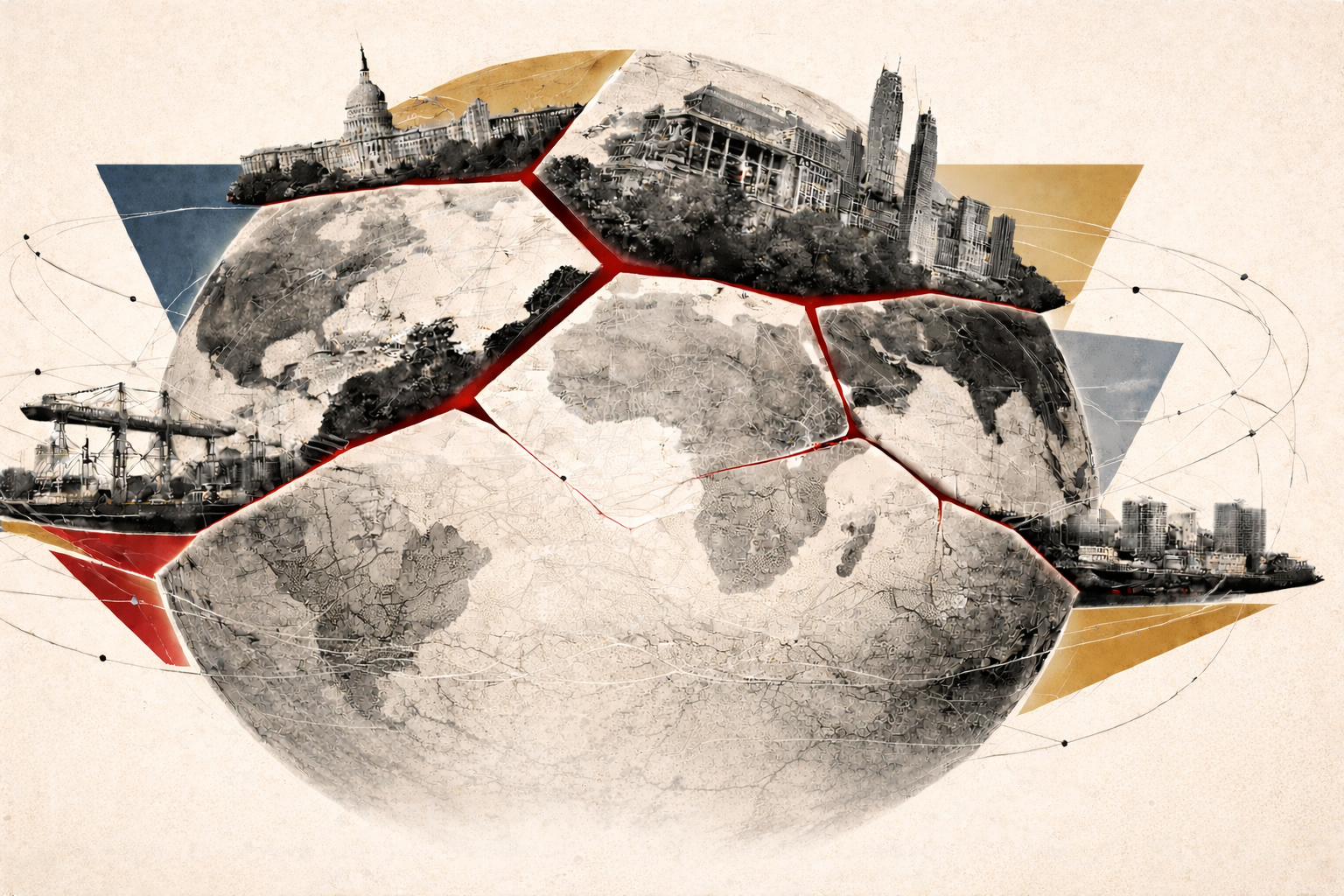 The unipolar moment is over. What follows is not a tidy transfer of hegemony but something messier, more volatile, and without modern precedent. An evidence based analysis of the forces reshaping global power, trade and investment.
In 2025, the evidence became impossible to ignore. The United States imposed the highest tariff rates since the 1940s. Europe committed to its largest peacetime military expansion in generations. China's economy hit its official growth targets but revealed deepening structural fragility. And a cohort of middle powers, from India to Saudi Arabia to Brazil, demonstrated that they would not be forced to choose sides.
This is not a transition towards a stable multipolar equilibrium. As the Munich Security Report 2025 observed, the world is experiencing "multipolarisation" rather than multipolarity: a process in which a greater number of actors can shape outcomes, but no agreed rules or institutions exist to manage competition between them. The Amundi Research Center's 2025 assessment put it more bluntly: multipolarity is one of the most unstable political systems because it assumes high uncertainty about the intentions of other states, increasing the risk of miscalculation. The implications for investors, institutions and policymakers are profound.
America Turns Inward
The second Trump administration has accelerated a trend that predates it by at least a decade: the withdrawal of the United States from the role of global guarantor. What distinguishes the current phase is not merely the rhetorical posture of "America First," but the systematic deployment of economic coercion against allies and adversaries alike.
The scale of tariff action in 2025 was exceptional. According to the Tax Foundation, the weighted average applied tariff rate on all US imports rose to 13.5%, the highest since 1946, amounting to the largest US tax increase as a percentage of GDP since 1993. The effective tariff rate peaked at nearly 17% in April, seven times higher than at the start of the year. US tariffs on Chinese imports now stand at 47.5%, according to calculations by the Peterson Institute for International Economics. The US Court of International Trade ruled the IEEPA tariffs illegal, though the legal landscape remains contested with appeals pending and new executive actions continuing to expand tariff coverage.
The economic consequences have been measurable but, so far, less dramatic than many feared. J.P. Morgan's research team revised global real GDP growth down to 1.4% for the fourth quarter of 2025, from 2.1% at the start of the year. A CEPR analysis found that even under partial suspension of the "Liberation Day" tariffs, the measures produced a net global welfare loss of 1.2%, with the US itself bearing a disproportionate 2% loss and overall trade falling by 5%. Direct trade between the US and China may collapse by as much as 90% under full escalation scenarios.
Yet the Peterson Institute found that, through October 2025, global trade patterns had not been dramatically reconfigured. Two way trade with the United States as a share of total trade changed very little among 19 impacted partners. Firms invest heavily in trade relationships, and inertia is a powerful force. The real reconfiguration may come in 2026 and beyond, as the cumulative weight of tariffs, uncertainty and retaliatory measures takes hold.
The broader strategic consequence is the erosion of American soft power and alliance credibility. As Foreign Affairs noted in late 2025, Canada announced its intention to double its exports to countries other than the United States, a form of "de-risking" once reserved for China. Beijing has noticed these fractures and is working to widen them.
China's Ambitions Meet Economic Reality
China's GDP grew 5.0% in 2025, neatly meeting Beijing's official target. But as Modern Diplomacy observed in January 2026, this headline stability masked deepening internal fragility. Fourth quarter growth slowed to 4.5%, the weakest in three years. Household consumption accounts for less than 40% of GDP, well below global norms. Consumer prices fell year on year in several months, signalling deflationary pressure. Retail sales growth slipped to around 3%, the slowest since late 2024.
The structural challenges are well documented: a property sector that accounts for roughly 20% of economic activity remains in prolonged distress; total social financing, the broadest measure of credit in the Chinese economy, stood at 309% of GDP by mid 2025, up from 303% at the end of 2024, according to Carnegie Endowment analysis; and the labour force is shrinking as demographic decline accelerates. The IMF has warned that China accounts for more than half of the increase in the global economy's debt to GDP ratio since 2008, a distinction shared only with Japan among major economies.
The more consequential question for the multipolar order is what China does with its diminished but still formidable economic weight. Beijing's response has been to double down on industrial self sufficiency, particularly in semiconductors, AI and green technology, while accelerating exports of manufactured goods. China's manufacturing overcapacity, especially in electric vehicles, batteries and solar panels, has become a political issue globally, with the EU and US imposing defensive tariffs.
China's pivot to the Global South remains central to its strategy. The Belt and Road Initiative continues to expand, and China has overtaken the United States as the leading trade partner for South America (JP Morgan Chase). Yet Foreign Affairs has argued that China's unparalleled industrial capacity and capital have become liabilities as well as strengths, generating overcapacity, trade friction and political backlash simultaneously.
The "peak China" thesis, which holds that Beijing faces an irreversible long term economic decline, remains contested. What is less debatable is that China's growth is becoming increasingly dependent on exports at precisely the moment when the global trading environment is becoming less forgiving. An economy powered primarily by external demand in an era of rising protectionism is inherently exposed.
Europe's Search for Strategic Autonomy
If there is one region where the multipolar transition has produced the sharpest policy pivot, it is Europe. The combination of Russia's war in Ukraine, American unpredictability under Trump, and growing awareness of economic vulnerability has catalysed a defence and industrial build up without precedent since the Cold War.
The numbers are striking. Total defence expenditure by EU member states reached approximately €343 billion in 2024, with 2025 spending estimated at €381 billion in constant prices, or 2.1% of GDP (EU Council). Defence investment rose 42% year on year in 2024 to €106 billion, with 2025 projections reaching €130 billion. McKinsey estimates that European defence spending could reach €800 billion by the end of the decade if the new NATO commitments are met.
At the NATO summit in The Hague in June 2025, allies agreed to a new defence investment commitment of 5% of GDP by 2035, comprising at least 3.5% for core defence and up to 1.5% for wider security related spending including infrastructure, resilience and the defence industrial base. Spain explicitly rejected the target, exposing the gap between headline commitments and fiscal reality across the alliance. The EU launched its €150 billion SAFE (Security Action for Europe) loan instrument and the €1.5 billion European Defence Industry Programme. Germany's €500 billion special infrastructure and climate fund, approved in March 2025, represents one of the largest fiscal commitments in the country's modern history, though only a portion is directly allocated to defence.
The European defence sector has responded accordingly. Since 2022, an equally weighted index of selected large, publicly listed European defence companies has delivered total shareholder returns of 401%, with much of this performance concentrated after the February 2025 Munich Security Conference. The forward looking question is how much of the spending increase is already reflected in current valuations. Venture capital investment in European defence technology rose sharply, from around €200 million in 2021 to €2.6 billion in 2025, though US defence tech investment remains roughly three times higher.
Yet "strategic autonomy" extends well beyond defence. As BNP Paribas Asset Management argued in a December 2025 analysis, European strategic autonomy represents a long term investment opportunity across defence, energy and technology. The European Commission's proposed Multiannual Financial Framework for 2028 to 2034 envisions a €2 trillion budget aimed at strengthening the EU's strategic position. The Critical Raw Materials Act, the Chips Act (mobilising €43 billion in public and private commitments), and the InvestAI plan (€200 billion for artificial intelligence) all reflect a recognition that economic sovereignty requires industrial capacity.
The constraints remain significant. European defence procurement is fragmented along national lines, limiting economies of scale. The continent's dependence on Chinese rare earth elements, particularly heavy rare earths essential for permanent magnets in wind turbines, electric vehicles and defence systems, remains near total. And as the European Parliament's research service has noted, the gap between economic weight and geopolitical influence is still wide, with political constraints making bold reform difficult.
The Rise of the Swing States
Perhaps the most distinctive feature of the emerging order is the growing influence of a cohort of middle powers that refuse to align exclusively with any bloc. A landmark June 2025 report by the Center for a New American Security identified six "global swing states," Brazil, India, Indonesia, Saudi Arabia, South Africa and Turkey, that will exert disproportionate influence over the future of international order. Each maintains simultaneous ties with the United States, Russia and China. None wishes to be forced into exclusive strategic alignment.
India offers the most instructive case. As Foreign Affairs documented in a December 2025 analysis, New Delhi is pursuing a strategy of diversification that goes well beyond the "nonalignment" of the Cold War era. Under pressure from the Trump administration, India has accelerated trade negotiations with the United Kingdom and the EU. It has deepened defence partnerships with Australia and Japan, explored shipbuilding cooperation with South Korea, and repaired relations with Canada. Simultaneously, it maintains its partnership with Russia and seeks to stabilise ties with China.
This strategy carries real risks. In September 2025, Indian military participation in a Russian exercise that simulated a nuclear attack on Europe upset EU member states at a moment when Brussels was attempting to finalise a trade agreement with India. At least two of those states, Poland and Romania, subsequently opened diplomatic and defence contacts with Pakistan. Managing diversified relationships is, as the Foreign Affairs analysis put it, a high maintenance strategy.
The Gulf states, particularly Saudi Arabia and the UAE, illustrate a different dimension of swing state behaviour. Goldman Sachs has described how high energy prices have given the GCC countries significant resources to deploy globally, with total GCC wealth expected to rise from $2.7 trillion to $3.5 trillion by 2026. Saudi Arabia is simultaneously deepening its economic relationship with China, maintaining its traditional security ties with the United States, investing in alternative economic partnerships with India, and pursuing its own ambitious domestic transformation.
The collective weight of these swing states is substantial. They dominate their respective regions, possess significant economic and demographic heft, and are increasingly active in crisis diplomacy and institutional reform. Their preferences will be decisive in shaping whether the emerging order settles into competing blocs or retains enough flexibility for cross cutting cooperation.
Russia, though weakened economically by sanctions, remains an active player in this landscape. Its growing dependence on China is reshaping the Eurasian balance, while its military and resource partnerships across Africa, from the Sahel to the Horn, provide leverage that Western governments have struggled to counter. Moscow's ability to sustain its war economy longer than many analysts predicted has complicated the assumption that economic isolation alone can contain a revisionist power.
Africa, too, is a theatre of intensifying multipolar competition that the article's conventional swing state frameworks often overlook. The continent is home to six of the world's ten fastest growing economies, the youngest population of any region, and a growing share of critical mineral reserves. China, Russia, the Gulf states, Turkey and Western powers are all vying for influence through infrastructure investment, security partnerships and resource extraction agreements. Africa's 54 votes at the United Nations make it a decisive constituency on questions of institutional reform.
Trade Fragmentation and the Weaponisation of Interdependence
The architecture of global trade is undergoing its most significant transformation since the Uruguay Round created the WTO in 1995. This is not simply a story of rising protectionism; it is the systematic deployment of economic interdependence as a tool of statecraft, what scholars have termed the "weaponisation of interdependence": the use of control over global networks, whether financial, technological or logistical, to coerce or punish other states.
Despite the tariff shocks of 2025, global trade proved remarkably resilient. UNCTAD reported that total trade reached a record $35 trillion in nominal terms, a 7% increase adding $2.2 trillion to the global economy, though part of this increase reflected currency movements and commodity price shifts rather than physical trade growth (World Economic Forum). Crucially, this growth was not driven by traditional heavyweights. South South trade expanded around 8%, with East Asia, Africa and the developing world providing the strongest momentum. Trade is not breaking; it is rewiring.
Yet the rewiring comes at a cost. A November 2025 study published in ScienceDirect found that the Trump administration's tariff regime has triggered a transformation extending beyond traditional protectionism to a systematic dismantling of multilateral institutions. The collapse of trust in US trade commitments and the erosion of export led development pathways across the Global South are catalysing the construction of alternative institutional frameworks, from the EU's engagement with the CPTPP to the acceleration of Asian regionalism and BRICS expansion.
The dollar's position, while still dominant, is being tested at the margins. It accounts for approximately 59% of global foreign exchange reserves and 89% of currency exchanges. But local currency trade settlements are growing: Russia and China settled 99.1% of their bilateral trade in roubles and yuan in 2025. The BRICS bloc has expanded to include Egypt, Ethiopia, Indonesia, Iran and the UAE, and discussed blockchain based payment systems as alternatives to SWIFT.
However, the reality check on de dollarisation is important. At the BRICS summit in Rio de Janeiro in July 2025, no serious concrete progress was made towards a common currency. India's External Affairs Minister was explicit: the dollar as a reserve currency remains the source of global economic stability (Lowy Institute). The deep liquidity of US Treasury markets, the established legal frameworks, and the sheer inertia of dollar denominated contracts mean that any displacement will be gradual, partial and sector specific.
What is emerging is not de dollarisation in the dramatic sense, but a multipolar payments landscape in which alternatives exist for specific corridors and relationships, particularly for countries seeking to insulate themselves from US sanctions. The US dollar's structural advantages remain formidable, but the willingness to explore alternatives has never been greater.
Flashpoints: Where the New Order Could Break
Multipolarity does not inherently produce conflict, but the transition towards it increases the risk of miscalculation. Three theatres deserve particular attention.
Taiwan
Taiwan remains the highest consequence flashpoint. The island produces over 60% of the world's semiconductors and more than 90% of the most advanced chips. Portfolio Adviser, citing Berenberg's analysis, described a Chinese invasion as the "nightmare scenario" for markets, while noting that a trade blockade alone would cause havoc in global commerce. While few analysts expect an imminent military confrontation, the military build up in the Taiwan Strait continues, and US pressure on Taiwanese chipmakers to invest more on American soil has intensified.
Ukraine
Ukraine remains unresolved. US Defence Secretary Pete Hegseth stated in February 2025 that the US would not send troops to secure a ceasefire, and that this was solely a European responsibility. This has been a powerful catalyst for European defence spending, but it has also exposed the limits of collective action. The war has hardened scepticism across much of the Global South, where the perceived double standard in the application of international law, rapid mobilisation of sanctions and aid for Ukraine compared with muted responses to conflicts in Yemen, Sudan and Gaza, is seen as evidence that the rules based order operates on a selective basis. This perception, whether fully justified or not, is actively shaping alignment choices in Brasilia, New Delhi and Pretoria.
The Middle East
The Middle East continues to simmer. The conflict in Gaza has become, in the eyes of much of the developing world, a symbol of what the emerging order looks like when the guardrails fail. It has accelerated the diplomatic activism of swing states, with Saudi Arabia, Turkey and others positioning themselves as crisis mediators. China's facilitation of the Saudi Iran rapprochement in 2023, building on earlier mediation by Oman and Iraq, demonstrated that Western powers no longer hold a monopoly on regional diplomacy.
The broader pattern is clear: contested regions are expanding while zones of stability are contracting. From the Arctic to cyberspace, from the Red Sea to the South China Sea, the absence of agreed norms and functioning multilateral institutions means that each flashpoint must be managed ad hoc, raising the cumulative probability of a crisis that cannot be contained.
What This Means for Investors and Institutions
The multipolar transition is not a temporary disruption to be weathered before returning to normal. It represents a structural regime change with lasting implications for asset allocation, risk management and institutional strategy.
BlackRock's Geopolitical Risk Dashboard, updated in December 2025, tracks ten key geopolitical risks and their potential market impact. The framework underscores that geopolitical and market risk often spike independently: the traditional assumption that geopolitical events produce short lived equity market reactions may not hold in a period of sustained structural change. MSCI research confirms that, over the past three decades, periods of high geopolitical risk have been associated with lower equity returns and higher forecast volatility.
Wellington Management's 2026 outlook framed the shift towards national security as a multi year theme offering both risks and opportunities. Defence and defence technology, AI, space and aerospace, and supply chain resilience are identified as areas where geopolitical spending creates sustained investment demand. European defence equities have been a clear beneficiary: the 401% total shareholder return since 2022 reflects a structural repricing, though investors must now assess how much future spending growth is already priced in.
Perhaps the most visible market expression of the multipolar transition is gold. Global demand reached a record 5,002 tonnes in 2025, with prices rising approximately 64% for the year, the strongest annual gain since the late 1970s, according to the World Gold Council. Investment demand surged 84% to a record 2,175 tonnes, while central bank purchases remained elevated at 863 tonnes. The rally reflects a convergence of safe haven demand, reserve diversification and declining confidence in traditional anchors of stability. Gold's share of official foreign exchange reserves is now approaching levels last seen in the early 1990s. For asset allocators, the message is straightforward: the world's oldest store of value is regaining relevance as the geopolitical order fragments.
For fixed income investors, sovereign risk premiums are increasingly sensitive to geopolitical developments, particularly in emerging markets with weaker fiscal buffers. The IMF's April 2025 Global Financial Stability Report documented how geopolitical risk events can adversely affect the stability of banks and non bank financial institutions, with potential contagion through trade and financial linkages.
Implications for Corporate Strategy
The implications for corporate strategy are equally significant. EY's 2025 Geostrategic Outlook identified digital sovereignty, climate policy fragmentation, and geo energy transitions as areas where regulatory divergence between blocs will create both compliance costs and investment opportunities. Supply chain visibility, scenario planning for multiple tariff regimes, and active engagement with industrial policy across jurisdictions are no longer optional competencies; they are strategic necessities.
The core challenge for investors is that the traditional playbook, in which geopolitical risk was treated as exogenous and typically short lived, is no longer adequate. In a multipolar world, geopolitical risk is endogenous to economic outcomes. It shapes trade routes, determines the cost of capital, redirects industrial policy, and redefines the boundaries of investable markets. Portfolio construction must account for this reality.
Conclusion
The world is not transitioning smoothly towards a stable multipolar equilibrium. It is hardening. The institutions built to manage great power competition in the twentieth century, the UN Security Council, the WTO, the Bretton Woods architecture, are under strain. They continue to function in important ways, particularly at the technical and plurilateral level, but their governance structures have not kept pace with shifts in economic and military power, and their legitimacy is increasingly contested by the states they were designed to serve. New frameworks, from BRICS expansion to European defence cooperation to bilateral trade deals, are emerging but remain incomplete.
What distinguishes this period from previous power transitions is the depth of economic interdependence that persists even as political competition intensifies. The US and China remain profoundly connected even as they decouple in strategic sectors. Europe depends on American security guarantees that it no longer fully trusts. Swing states extract concessions from all sides while committing to none.
For decision makers in governments, boardrooms and investment committees, the imperative is clear: geopolitical risk is no longer a peripheral consideration. It is a first order variable shaping returns, costs and strategic options. Those who integrate this reality into their frameworks, investing in resilience, diversification and active geopolitical intelligence, will be better positioned than those who wait for the old order to reassert itself. It will not.
Sources
1. Amundi Research Center, "Multipolar World in Action," September 2025
2. Munich Security Report 2025, "Multipolarization"
3. Tax Foundation, "Trump Tariffs: The Economic Impact," February 2026
4. J.P. Morgan Global Research, "US Tariffs: What's the Impact?"
5. CEPR, "Roaring Tariffs: The Global Impact of the 2025 US Trade War"
6. PIIE, "Trump's Trade War Wreaked Little Havoc on Trade Patterns," February 2026
7. Foreign Affairs, "China's Long Economic War," December 2025
8. Modern Diplomacy, "China Hits Its Target But the Slowdown Is Getting Harder to Ignore," January 2026
9. EU Council, "EU Defence in Numbers"
10. McKinsey, "NATO Defense Spending: Tracking the Numbers," February 2026
11. BNP Paribas AM, "European Strategic Autonomy," December 2025
12. European Commission, "Future of European Defence"
13. CNAS, "Global Swing States and the New Great Power Competition," June 2025
14. Foreign Affairs, "How to Survive in a Multialigned World," December 2025
15. Goldman Sachs, "The Rise of Geopolitical Swing States"
16. World Economic Forum, "Top Trade Stories of 2025"
17. ScienceDirect, "US Tariff Policy and a Transformation of Global Trade Architecture," November 2025
18. Lowy Institute, "A Reality Check for BRICS and the Lofty Dedollarisation Agenda"
19. BlackRock Investment Institute, "Geopolitical Risk Dashboard," December 2025
20. MSCI, "Understanding Geopolitical Risk in Investments"
21. Wellington Management, "Geopolitics in 2026," January 2026
22. EY, "Top 10 Geopolitical Risks: 2025 Geostrategic Outlook"
23. Portfolio Adviser, "Biggest Geopolitical Risks for Investors in 2026"
24. JP Morgan Chase, "World Rewired: Navigating a Multi-Speed, Multipolar Order"
25. IMF, "Geopolitical Risks: Implications for Asset Prices and Financial Stability," April 2025
26. The Japan Times, "The Perils of a Multisphere World," December 2025
27. Carnegie Endowment, "Using China's Central Government Balance Sheet to Clean Up Local Government Debt," August 2025
28. World Gold Council, "Gold Demand Trends: Full Year 2025," January 2026
29. NATO, "The Hague Summit Declaration," June 2025
The unipolar moment is over. What follows is not a tidy transfer of hegemony but something messier, more volatile, and without modern precedent. An evidence based analysis of the forces reshaping global power, trade and investment.
In 2025, the evidence became impossible to ignore. The United States imposed the highest tariff rates since the 1940s. Europe committed to its largest peacetime military expansion in generations. China's economy hit its official growth targets but revealed deepening structural fragility. And a cohort of middle powers, from India to Saudi Arabia to Brazil, demonstrated that they would not be forced to choose sides.
This is not a transition towards a stable multipolar equilibrium. As the Munich Security Report 2025 observed, the world is experiencing "multipolarisation" rather than multipolarity: a process in which a greater number of actors can shape outcomes, but no agreed rules or institutions exist to manage competition between them. The Amundi Research Center's 2025 assessment put it more bluntly: multipolarity is one of the most unstable political systems because it assumes high uncertainty about the intentions of other states, increasing the risk of miscalculation. The implications for investors, institutions and policymakers are profound.
America Turns Inward
The second Trump administration has accelerated a trend that predates it by at least a decade: the withdrawal of the United States from the role of global guarantor. What distinguishes the current phase is not merely the rhetorical posture of "America First," but the systematic deployment of economic coercion against allies and adversaries alike.
The scale of tariff action in 2025 was exceptional. According to the Tax Foundation, the weighted average applied tariff rate on all US imports rose to 13.5%, the highest since 1946, amounting to the largest US tax increase as a percentage of GDP since 1993. The effective tariff rate peaked at nearly 17% in April, seven times higher than at the start of the year. US tariffs on Chinese imports now stand at 47.5%, according to calculations by the Peterson Institute for International Economics. The US Court of International Trade ruled the IEEPA tariffs illegal, though the legal landscape remains contested with appeals pending and new executive actions continuing to expand tariff coverage.
The economic consequences have been measurable but, so far, less dramatic than many feared. J.P. Morgan's research team revised global real GDP growth down to 1.4% for the fourth quarter of 2025, from 2.1% at the start of the year. A CEPR analysis found that even under partial suspension of the "Liberation Day" tariffs, the measures produced a net global welfare loss of 1.2%, with the US itself bearing a disproportionate 2% loss and overall trade falling by 5%. Direct trade between the US and China may collapse by as much as 90% under full escalation scenarios.
Yet the Peterson Institute found that, through October 2025, global trade patterns had not been dramatically reconfigured. Two way trade with the United States as a share of total trade changed very little among 19 impacted partners. Firms invest heavily in trade relationships, and inertia is a powerful force. The real reconfiguration may come in 2026 and beyond, as the cumulative weight of tariffs, uncertainty and retaliatory measures takes hold.
The broader strategic consequence is the erosion of American soft power and alliance credibility. As Foreign Affairs noted in late 2025, Canada announced its intention to double its exports to countries other than the United States, a form of "de-risking" once reserved for China. Beijing has noticed these fractures and is working to widen them.
China's Ambitions Meet Economic Reality
China's GDP grew 5.0% in 2025, neatly meeting Beijing's official target. But as Modern Diplomacy observed in January 2026, this headline stability masked deepening internal fragility. Fourth quarter growth slowed to 4.5%, the weakest in three years. Household consumption accounts for less than 40% of GDP, well below global norms. Consumer prices fell year on year in several months, signalling deflationary pressure. Retail sales growth slipped to around 3%, the slowest since late 2024.
The structural challenges are well documented: a property sector that accounts for roughly 20% of economic activity remains in prolonged distress; total social financing, the broadest measure of credit in the Chinese economy, stood at 309% of GDP by mid 2025, up from 303% at the end of 2024, according to Carnegie Endowment analysis; and the labour force is shrinking as demographic decline accelerates. The IMF has warned that China accounts for more than half of the increase in the global economy's debt to GDP ratio since 2008, a distinction shared only with Japan among major economies.
The more consequential question for the multipolar order is what China does with its diminished but still formidable economic weight. Beijing's response has been to double down on industrial self sufficiency, particularly in semiconductors, AI and green technology, while accelerating exports of manufactured goods. China's manufacturing overcapacity, especially in electric vehicles, batteries and solar panels, has become a political issue globally, with the EU and US imposing defensive tariffs.
China's pivot to the Global South remains central to its strategy. The Belt and Road Initiative continues to expand, and China has overtaken the United States as the leading trade partner for South America (JP Morgan Chase). Yet Foreign Affairs has argued that China's unparalleled industrial capacity and capital have become liabilities as well as strengths, generating overcapacity, trade friction and political backlash simultaneously.
The "peak China" thesis, which holds that Beijing faces an irreversible long term economic decline, remains contested. What is less debatable is that China's growth is becoming increasingly dependent on exports at precisely the moment when the global trading environment is becoming less forgiving. An economy powered primarily by external demand in an era of rising protectionism is inherently exposed.
Europe's Search for Strategic Autonomy
If there is one region where the multipolar transition has produced the sharpest policy pivot, it is Europe. The combination of Russia's war in Ukraine, American unpredictability under Trump, and growing awareness of economic vulnerability has catalysed a defence and industrial build up without precedent since the Cold War.
The numbers are striking. Total defence expenditure by EU member states reached approximately €343 billion in 2024, with 2025 spending estimated at €381 billion in constant prices, or 2.1% of GDP (EU Council). Defence investment rose 42% year on year in 2024 to €106 billion, with 2025 projections reaching €130 billion. McKinsey estimates that European defence spending could reach €800 billion by the end of the decade if the new NATO commitments are met.
At the NATO summit in The Hague in June 2025, allies agreed to a new defence investment commitment of 5% of GDP by 2035, comprising at least 3.5% for core defence and up to 1.5% for wider security related spending including infrastructure, resilience and the defence industrial base. Spain explicitly rejected the target, exposing the gap between headline commitments and fiscal reality across the alliance. The EU launched its €150 billion SAFE (Security Action for Europe) loan instrument and the €1.5 billion European Defence Industry Programme. Germany's €500 billion special infrastructure and climate fund, approved in March 2025, represents one of the largest fiscal commitments in the country's modern history, though only a portion is directly allocated to defence.
The European defence sector has responded accordingly. Since 2022, an equally weighted index of selected large, publicly listed European defence companies has delivered total shareholder returns of 401%, with much of this performance concentrated after the February 2025 Munich Security Conference. The forward looking question is how much of the spending increase is already reflected in current valuations. Venture capital investment in European defence technology rose sharply, from around €200 million in 2021 to €2.6 billion in 2025, though US defence tech investment remains roughly three times higher.
Yet "strategic autonomy" extends well beyond defence. As BNP Paribas Asset Management argued in a December 2025 analysis, European strategic autonomy represents a long term investment opportunity across defence, energy and technology. The European Commission's proposed Multiannual Financial Framework for 2028 to 2034 envisions a €2 trillion budget aimed at strengthening the EU's strategic position. The Critical Raw Materials Act, the Chips Act (mobilising €43 billion in public and private commitments), and the InvestAI plan (€200 billion for artificial intelligence) all reflect a recognition that economic sovereignty requires industrial capacity.
The constraints remain significant. European defence procurement is fragmented along national lines, limiting economies of scale. The continent's dependence on Chinese rare earth elements, particularly heavy rare earths essential for permanent magnets in wind turbines, electric vehicles and defence systems, remains near total. And as the European Parliament's research service has noted, the gap between economic weight and geopolitical influence is still wide, with political constraints making bold reform difficult.
The Rise of the Swing States
Perhaps the most distinctive feature of the emerging order is the growing influence of a cohort of middle powers that refuse to align exclusively with any bloc. A landmark June 2025 report by the Center for a New American Security identified six "global swing states," Brazil, India, Indonesia, Saudi Arabia, South Africa and Turkey, that will exert disproportionate influence over the future of international order. Each maintains simultaneous ties with the United States, Russia and China. None wishes to be forced into exclusive strategic alignment.
India offers the most instructive case. As Foreign Affairs documented in a December 2025 analysis, New Delhi is pursuing a strategy of diversification that goes well beyond the "nonalignment" of the Cold War era. Under pressure from the Trump administration, India has accelerated trade negotiations with the United Kingdom and the EU. It has deepened defence partnerships with Australia and Japan, explored shipbuilding cooperation with South Korea, and repaired relations with Canada. Simultaneously, it maintains its partnership with Russia and seeks to stabilise ties with China.
This strategy carries real risks. In September 2025, Indian military participation in a Russian exercise that simulated a nuclear attack on Europe upset EU member states at a moment when Brussels was attempting to finalise a trade agreement with India. At least two of those states, Poland and Romania, subsequently opened diplomatic and defence contacts with Pakistan. Managing diversified relationships is, as the Foreign Affairs analysis put it, a high maintenance strategy.
The Gulf states, particularly Saudi Arabia and the UAE, illustrate a different dimension of swing state behaviour. Goldman Sachs has described how high energy prices have given the GCC countries significant resources to deploy globally, with total GCC wealth expected to rise from $2.7 trillion to $3.5 trillion by 2026. Saudi Arabia is simultaneously deepening its economic relationship with China, maintaining its traditional security ties with the United States, investing in alternative economic partnerships with India, and pursuing its own ambitious domestic transformation.
The collective weight of these swing states is substantial. They dominate their respective regions, possess significant economic and demographic heft, and are increasingly active in crisis diplomacy and institutional reform. Their preferences will be decisive in shaping whether the emerging order settles into competing blocs or retains enough flexibility for cross cutting cooperation.
Russia, though weakened economically by sanctions, remains an active player in this landscape. Its growing dependence on China is reshaping the Eurasian balance, while its military and resource partnerships across Africa, from the Sahel to the Horn, provide leverage that Western governments have struggled to counter. Moscow's ability to sustain its war economy longer than many analysts predicted has complicated the assumption that economic isolation alone can contain a revisionist power.
Africa, too, is a theatre of intensifying multipolar competition that the article's conventional swing state frameworks often overlook. The continent is home to six of the world's ten fastest growing economies, the youngest population of any region, and a growing share of critical mineral reserves. China, Russia, the Gulf states, Turkey and Western powers are all vying for influence through infrastructure investment, security partnerships and resource extraction agreements. Africa's 54 votes at the United Nations make it a decisive constituency on questions of institutional reform.
Trade Fragmentation and the Weaponisation of Interdependence
The architecture of global trade is undergoing its most significant transformation since the Uruguay Round created the WTO in 1995. This is not simply a story of rising protectionism; it is the systematic deployment of economic interdependence as a tool of statecraft, what scholars have termed the "weaponisation of interdependence": the use of control over global networks, whether financial, technological or logistical, to coerce or punish other states.
Despite the tariff shocks of 2025, global trade proved remarkably resilient. UNCTAD reported that total trade reached a record $35 trillion in nominal terms, a 7% increase adding $2.2 trillion to the global economy, though part of this increase reflected currency movements and commodity price shifts rather than physical trade growth (World Economic Forum). Crucially, this growth was not driven by traditional heavyweights. South South trade expanded around 8%, with East Asia, Africa and the developing world providing the strongest momentum. Trade is not breaking; it is rewiring.
Yet the rewiring comes at a cost. A November 2025 study published in ScienceDirect found that the Trump administration's tariff regime has triggered a transformation extending beyond traditional protectionism to a systematic dismantling of multilateral institutions. The collapse of trust in US trade commitments and the erosion of export led development pathways across the Global South are catalysing the construction of alternative institutional frameworks, from the EU's engagement with the CPTPP to the acceleration of Asian regionalism and BRICS expansion.
The dollar's position, while still dominant, is being tested at the margins. It accounts for approximately 59% of global foreign exchange reserves and 89% of currency exchanges. But local currency trade settlements are growing: Russia and China settled 99.1% of their bilateral trade in roubles and yuan in 2025. The BRICS bloc has expanded to include Egypt, Ethiopia, Indonesia, Iran and the UAE, and discussed blockchain based payment systems as alternatives to SWIFT.
However, the reality check on de dollarisation is important. At the BRICS summit in Rio de Janeiro in July 2025, no serious concrete progress was made towards a common currency. India's External Affairs Minister was explicit: the dollar as a reserve currency remains the source of global economic stability (Lowy Institute). The deep liquidity of US Treasury markets, the established legal frameworks, and the sheer inertia of dollar denominated contracts mean that any displacement will be gradual, partial and sector specific.
What is emerging is not de dollarisation in the dramatic sense, but a multipolar payments landscape in which alternatives exist for specific corridors and relationships, particularly for countries seeking to insulate themselves from US sanctions. The US dollar's structural advantages remain formidable, but the willingness to explore alternatives has never been greater.
Flashpoints: Where the New Order Could Break
Multipolarity does not inherently produce conflict, but the transition towards it increases the risk of miscalculation. Three theatres deserve particular attention.
Taiwan
Taiwan remains the highest consequence flashpoint. The island produces over 60% of the world's semiconductors and more than 90% of the most advanced chips. Portfolio Adviser, citing Berenberg's analysis, described a Chinese invasion as the "nightmare scenario" for markets, while noting that a trade blockade alone would cause havoc in global commerce. While few analysts expect an imminent military confrontation, the military build up in the Taiwan Strait continues, and US pressure on Taiwanese chipmakers to invest more on American soil has intensified.
Ukraine
Ukraine remains unresolved. US Defence Secretary Pete Hegseth stated in February 2025 that the US would not send troops to secure a ceasefire, and that this was solely a European responsibility. This has been a powerful catalyst for European defence spending, but it has also exposed the limits of collective action. The war has hardened scepticism across much of the Global South, where the perceived double standard in the application of international law, rapid mobilisation of sanctions and aid for Ukraine compared with muted responses to conflicts in Yemen, Sudan and Gaza, is seen as evidence that the rules based order operates on a selective basis. This perception, whether fully justified or not, is actively shaping alignment choices in Brasilia, New Delhi and Pretoria.
The Middle East
The Middle East continues to simmer. The conflict in Gaza has become, in the eyes of much of the developing world, a symbol of what the emerging order looks like when the guardrails fail. It has accelerated the diplomatic activism of swing states, with Saudi Arabia, Turkey and others positioning themselves as crisis mediators. China's facilitation of the Saudi Iran rapprochement in 2023, building on earlier mediation by Oman and Iraq, demonstrated that Western powers no longer hold a monopoly on regional diplomacy.
The broader pattern is clear: contested regions are expanding while zones of stability are contracting. From the Arctic to cyberspace, from the Red Sea to the South China Sea, the absence of agreed norms and functioning multilateral institutions means that each flashpoint must be managed ad hoc, raising the cumulative probability of a crisis that cannot be contained.
What This Means for Investors and Institutions
The multipolar transition is not a temporary disruption to be weathered before returning to normal. It represents a structural regime change with lasting implications for asset allocation, risk management and institutional strategy.
BlackRock's Geopolitical Risk Dashboard, updated in December 2025, tracks ten key geopolitical risks and their potential market impact. The framework underscores that geopolitical and market risk often spike independently: the traditional assumption that geopolitical events produce short lived equity market reactions may not hold in a period of sustained structural change. MSCI research confirms that, over the past three decades, periods of high geopolitical risk have been associated with lower equity returns and higher forecast volatility.
Wellington Management's 2026 outlook framed the shift towards national security as a multi year theme offering both risks and opportunities. Defence and defence technology, AI, space and aerospace, and supply chain resilience are identified as areas where geopolitical spending creates sustained investment demand. European defence equities have been a clear beneficiary: the 401% total shareholder return since 2022 reflects a structural repricing, though investors must now assess how much future spending growth is already priced in.
Perhaps the most visible market expression of the multipolar transition is gold. Global demand reached a record 5,002 tonnes in 2025, with prices rising approximately 64% for the year, the strongest annual gain since the late 1970s, according to the World Gold Council. Investment demand surged 84% to a record 2,175 tonnes, while central bank purchases remained elevated at 863 tonnes. The rally reflects a convergence of safe haven demand, reserve diversification and declining confidence in traditional anchors of stability. Gold's share of official foreign exchange reserves is now approaching levels last seen in the early 1990s. For asset allocators, the message is straightforward: the world's oldest store of value is regaining relevance as the geopolitical order fragments.
For fixed income investors, sovereign risk premiums are increasingly sensitive to geopolitical developments, particularly in emerging markets with weaker fiscal buffers. The IMF's April 2025 Global Financial Stability Report documented how geopolitical risk events can adversely affect the stability of banks and non bank financial institutions, with potential contagion through trade and financial linkages.
Implications for Corporate Strategy
The implications for corporate strategy are equally significant. EY's 2025 Geostrategic Outlook identified digital sovereignty, climate policy fragmentation, and geo energy transitions as areas where regulatory divergence between blocs will create both compliance costs and investment opportunities. Supply chain visibility, scenario planning for multiple tariff regimes, and active engagement with industrial policy across jurisdictions are no longer optional competencies; they are strategic necessities.
The core challenge for investors is that the traditional playbook, in which geopolitical risk was treated as exogenous and typically short lived, is no longer adequate. In a multipolar world, geopolitical risk is endogenous to economic outcomes. It shapes trade routes, determines the cost of capital, redirects industrial policy, and redefines the boundaries of investable markets. Portfolio construction must account for this reality.
Conclusion
The world is not transitioning smoothly towards a stable multipolar equilibrium. It is hardening. The institutions built to manage great power competition in the twentieth century, the UN Security Council, the WTO, the Bretton Woods architecture, are under strain. They continue to function in important ways, particularly at the technical and plurilateral level, but their governance structures have not kept pace with shifts in economic and military power, and their legitimacy is increasingly contested by the states they were designed to serve. New frameworks, from BRICS expansion to European defence cooperation to bilateral trade deals, are emerging but remain incomplete.
What distinguishes this period from previous power transitions is the depth of economic interdependence that persists even as political competition intensifies. The US and China remain profoundly connected even as they decouple in strategic sectors. Europe depends on American security guarantees that it no longer fully trusts. Swing states extract concessions from all sides while committing to none.
For decision makers in governments, boardrooms and investment committees, the imperative is clear: geopolitical risk is no longer a peripheral consideration. It is a first order variable shaping returns, costs and strategic options. Those who integrate this reality into their frameworks, investing in resilience, diversification and active geopolitical intelligence, will be better positioned than those who wait for the old order to reassert itself. It will not.
Sources
1. Amundi Research Center, "Multipolar World in Action," September 2025
2. Munich Security Report 2025, "Multipolarization"
3. Tax Foundation, "Trump Tariffs: The Economic Impact," February 2026
4. J.P. Morgan Global Research, "US Tariffs: What's the Impact?"
5. CEPR, "Roaring Tariffs: The Global Impact of the 2025 US Trade War"
6. PIIE, "Trump's Trade War Wreaked Little Havoc on Trade Patterns," February 2026
7. Foreign Affairs, "China's Long Economic War," December 2025
8. Modern Diplomacy, "China Hits Its Target But the Slowdown Is Getting Harder to Ignore," January 2026
9. EU Council, "EU Defence in Numbers"
10. McKinsey, "NATO Defense Spending: Tracking the Numbers," February 2026
11. BNP Paribas AM, "European Strategic Autonomy," December 2025
12. European Commission, "Future of European Defence"
13. CNAS, "Global Swing States and the New Great Power Competition," June 2025
14. Foreign Affairs, "How to Survive in a Multialigned World," December 2025
15. Goldman Sachs, "The Rise of Geopolitical Swing States"
16. World Economic Forum, "Top Trade Stories of 2025"
17. ScienceDirect, "US Tariff Policy and a Transformation of Global Trade Architecture," November 2025
18. Lowy Institute, "A Reality Check for BRICS and the Lofty Dedollarisation Agenda"
19. BlackRock Investment Institute, "Geopolitical Risk Dashboard," December 2025
20. MSCI, "Understanding Geopolitical Risk in Investments"
21. Wellington Management, "Geopolitics in 2026," January 2026
22. EY, "Top 10 Geopolitical Risks: 2025 Geostrategic Outlook"
23. Portfolio Adviser, "Biggest Geopolitical Risks for Investors in 2026"
24. JP Morgan Chase, "World Rewired: Navigating a Multi-Speed, Multipolar Order"
25. IMF, "Geopolitical Risks: Implications for Asset Prices and Financial Stability," April 2025
26. The Japan Times, "The Perils of a Multisphere World," December 2025
27. Carnegie Endowment, "Using China's Central Government Balance Sheet to Clean Up Local Government Debt," August 2025
28. World Gold Council, "Gold Demand Trends: Full Year 2025," January 2026
29. NATO, "The Hague Summit Declaration," June 2025
Published on PatternTheories by Aleksander Meidell-Hagewick