The maritime industry—the foundation of global commerce—is absorbing the impact of new trade policies, infrastructure investments, and technological shifts reshaping the global order.
By Aleksander Meidell-Hagewick
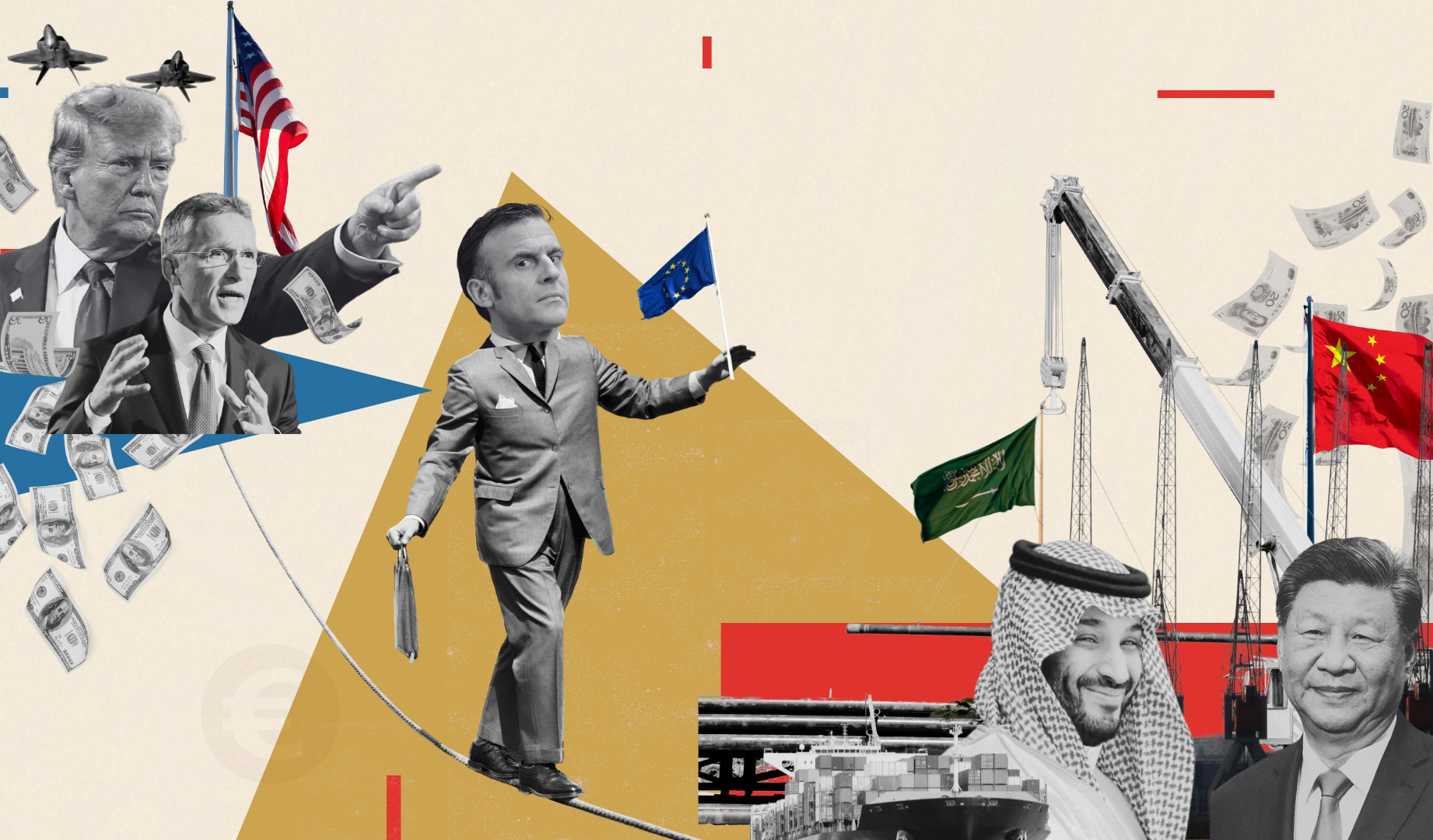 The maritime industry—the foundation of global commerce—forms the core realignment, absorbing the impact of new trade policies, infrastructure investments, and technological shifts.
Key Themes
1. Europe's Trade and Investment Are Pivoting Eastward — While still reliant on US security, Europe is deepening ties with the Gulf, ASEAN, and Africa.
2. The West Is Losing Its Trade Monopoly — BRICS expansion, the India-Middle East-Europe Corridor, and ASEAN growth signal a shift to a multi-polar system.
3. Gulf and Asian Capital Is Reshaping Europe — Saudi, UAE, and Chinese sovereign funds are securing stakes in European ports, shipping, and logistics hubs.
4. Maritime Trade Is Redrawing Global Routes — Red Sea disruptions and rising Gulf and African port expansions shift trade flows.
"He who controls the sea controls everything." — Themistocles
The US-China Divide: Fragmentation and Trade Recalibration
The US has shifted from merely reducing reliance on China to actively excluding it from global supply chains for strategic technologies. America has escalated its tech blockade, banning sales of cutting-edge chips and manufacturing equipment to Chinese firms.
The CHIP 4 Alliance—comprising the US, Japan, Taiwan, and South Korea—aims to secure semiconductor supply chains. China's share of US manufactured goods imports dropped from 24% to 15% between 2017 and 2023.
China has responded with WTO complaints, a $143 billion semiconductor stimulus, and ramped up domestic chip production.
Russia's War and The Energy Reorder
Russia's invasion of Ukraine triggered the biggest shift of the 21st century in Europe's energy supply chains. Russian energy fell from over 40% of EU gas imports to just 8% by 2023. The €210 billion REPowerEU plan was launched to ensure energy security.
Qatar's liquefaction capacity will soar from 77 MTPA to 142 MTPA by 2030, potentially controlling 25% of the global LNG market.
Europe Clamps Down
Despite EU-wide policies, Europe remains deeply divided on trade alignment. China remains its largest trade partner—€626 billion in imports in 2022. Germany's imports of Chinese electronics surged from 24% to 30% between 2017 and 2023.
Gulf investors remain active: DP World announced £1 billion expansion at London Gateway. Qatar's QTerminals acquired strategic positions at Rotterdam. Saudi's PIF acquired stakes in London Heathrow.
Redrawing the Trade Map: How Shipping Routes, Ports, and Power Are Shifting
The Red Sea crisis has upended one of the world's most vital shipping arteries. Asia-Europe transit times have increased by 30-50%. Insurance costs surged from 0.6% to 2% of cargo value. Container costs from Shanghai to Genoa doubled from $1,521 to over $6,000.
Europe's ports are undergoing massive investment: €7-9 billion planned annually over the next decade, with focus on sustainability, clean energy, and hydrogen infrastructure.
Middle East: A New Strategic Partner for Europe?
The EU Council adopted the "Strategic Partnership with the Gulf" in May 2022, acknowledging the GCC's growing role as a middle power.
India & ASEAN: Emerging Trading Hubs
Now the world's fifth-largest economy, India is projected to surpass Japan and Germany by 2030. The EU-India Trade and Technology Council focuses on strategic technologies, resilient supply chains, and green energy.
The maritime industry—the foundation of global commerce—forms the core realignment, absorbing the impact of new trade policies, infrastructure investments, and technological shifts.
Key Themes
1. Europe's Trade and Investment Are Pivoting Eastward — While still reliant on US security, Europe is deepening ties with the Gulf, ASEAN, and Africa.
2. The West Is Losing Its Trade Monopoly — BRICS expansion, the India-Middle East-Europe Corridor, and ASEAN growth signal a shift to a multi-polar system.
3. Gulf and Asian Capital Is Reshaping Europe — Saudi, UAE, and Chinese sovereign funds are securing stakes in European ports, shipping, and logistics hubs.
4. Maritime Trade Is Redrawing Global Routes — Red Sea disruptions and rising Gulf and African port expansions shift trade flows.
"He who controls the sea controls everything." — Themistocles
The US-China Divide: Fragmentation and Trade Recalibration
The US has shifted from merely reducing reliance on China to actively excluding it from global supply chains for strategic technologies. America has escalated its tech blockade, banning sales of cutting-edge chips and manufacturing equipment to Chinese firms.
The CHIP 4 Alliance—comprising the US, Japan, Taiwan, and South Korea—aims to secure semiconductor supply chains. China's share of US manufactured goods imports dropped from 24% to 15% between 2017 and 2023.
China has responded with WTO complaints, a $143 billion semiconductor stimulus, and ramped up domestic chip production.
Russia's War and The Energy Reorder
Russia's invasion of Ukraine triggered the biggest shift of the 21st century in Europe's energy supply chains. Russian energy fell from over 40% of EU gas imports to just 8% by 2023. The €210 billion REPowerEU plan was launched to ensure energy security.
Qatar's liquefaction capacity will soar from 77 MTPA to 142 MTPA by 2030, potentially controlling 25% of the global LNG market.
Europe Clamps Down
Despite EU-wide policies, Europe remains deeply divided on trade alignment. China remains its largest trade partner—€626 billion in imports in 2022. Germany's imports of Chinese electronics surged from 24% to 30% between 2017 and 2023.
Gulf investors remain active: DP World announced £1 billion expansion at London Gateway. Qatar's QTerminals acquired strategic positions at Rotterdam. Saudi's PIF acquired stakes in London Heathrow.
Redrawing the Trade Map: How Shipping Routes, Ports, and Power Are Shifting
The Red Sea crisis has upended one of the world's most vital shipping arteries. Asia-Europe transit times have increased by 30-50%. Insurance costs surged from 0.6% to 2% of cargo value. Container costs from Shanghai to Genoa doubled from $1,521 to over $6,000.
Europe's ports are undergoing massive investment: €7-9 billion planned annually over the next decade, with focus on sustainability, clean energy, and hydrogen infrastructure.
Middle East: A New Strategic Partner for Europe?
The EU Council adopted the "Strategic Partnership with the Gulf" in May 2022, acknowledging the GCC's growing role as a middle power.
India & ASEAN: Emerging Trading Hubs
Now the world's fifth-largest economy, India is projected to surpass Japan and Germany by 2030. The EU-India Trade and Technology Council focuses on strategic technologies, resilient supply chains, and green energy.
Published on PatternTheories by Aleksander Meidell-Hagewick